 LOWIFAR BEARINGS
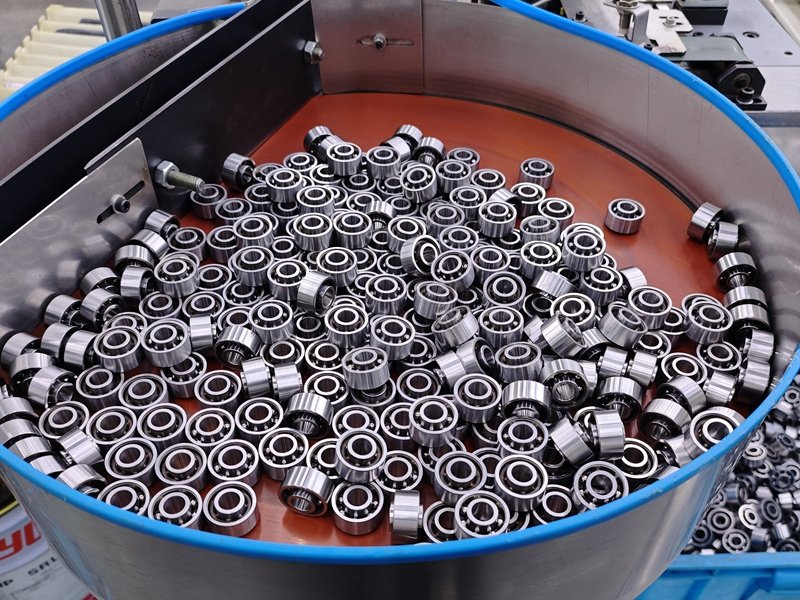
Deep groove ball bearings are among the most widely used rolling bearings due to their simple structure, high rotational speed, low friction, and versatile applications. While selecting the correct bearing size and material is important, bearing internal clearance is another critical factor that directly affects bearing performance, service life, operating temperature, and noise.
Choosing the appropriate clearance helps ensure stable operation and prevents premature bearing failure.
What Is Bearing Internal Clearance?
Bearing internal clearance refers to the total distance that one bearing ring can move relative to the other before installation.
There are two types of internal clearance:
- Radial Clearance – Movement perpendicular to the shaft axis.
- Axial Clearance – Movement parallel to the shaft axis.
For deep groove ball bearings, radial internal clearance is the parameter most commonly specified.
During operation, the actual operating clearance becomes smaller due to interference fits, thermal expansion, and operating loads. Therefore, selecting the correct initial clearance is essential.
Standard Bearing Clearance Classes
The most common clearance classes for deep groove ball bearings include:
| Clearance Class | Description | Relative Clearance |
|---|---|---|
| C2 | Smaller than normal | Small |
| CN (Normal) | Standard clearance | Medium |
| C3 | Greater than normal | Large |
| C4 | Greater than C3 | Larger |
| C5 | Largest standard clearance | Very Large |
Generally:
C2 < CN < C3 < C4 < C5
Each clearance class is designed for different operating conditions rather than representing better or worse quality.
Applications of Different Clearance Classes
C2 Clearance
C2 bearings have smaller internal clearance and are suitable for applications requiring high running accuracy with minimal shaft deflection.
Typical applications include:
- Precision instruments
- Measuring equipment
- Electric motors with light loads
- Household appliances
- Low-temperature environments
Advantages:
- Lower vibration
- Reduced running noise
- Improved positioning accuracy
CN (Normal) Clearance
CN is the most commonly used clearance for general industrial applications.
Suitable for:
- Pumps
- Gearboxes
- Agricultural machinery
- Fans
- Conveyors
- General electric motors
When operating temperatures and loads are moderate, CN clearance provides an excellent balance between rigidity and bearing life.
C3 Clearance
C3 bearings provide greater internal clearance than standard bearings and are widely used in industrial equipment.
Recommended for:
- High-speed electric motors
- Automotive alternators
- Compressors
- Industrial fans
- Machine tools
- Textile machinery
Advantages include:
- Better accommodation of thermal expansion
- Lower risk of preload during operation
- Reduced operating temperature
- Longer bearing life under higher speeds
C3 clearance is one of the most popular choices for high-speed applications.
C4 Clearance
C4 bearings are designed for more demanding operating conditions.
Typical applications include:
- Mining equipment
- Vibrating screens
- Heavy-duty conveyors
- Crushers
- Steel mills
- High-temperature machinery
These applications often experience significant shaft expansion or heavy loads, making larger clearance necessary.
C5 Clearance
C5 bearings provide the largest internal clearance and are generally reserved for specialized equipment.
Common applications:
- Special vibrating machinery
- Extremely high-temperature equipment
- Heavy industrial machinery
- Certain custom-designed systems
Because excessive clearance may increase vibration and noise, C5 should only be selected when specifically required by the application.
Factors Affecting Clearance Selection
Selecting the correct clearance depends on several operating conditions.
1. Operating Temperature
As temperature increases, the shaft generally expands more than the bearing housing, reducing internal clearance.
Higher operating temperatures usually require larger initial clearance, such as C3 or C4.
2. Shaft and Housing Fit
Interference fits compress the bearing rings and reduce internal clearance.
Typical examples:
- Tight shaft fit → Smaller operating clearance
- Heavy interference fit → Larger initial clearance recommended
3. Rotational Speed
High-speed applications generate more heat, reducing clearance during operation.
For this reason, many high-speed electric motors use C3 clearance.
4. Load Conditions
Heavy radial loads can cause elastic deformation of the bearing components.
Applications with heavy loads may benefit from larger clearance to maintain stable operation.
5. Precision Requirements
High-precision equipment often requires smaller clearance to improve shaft positioning accuracy and reduce vibration.
However, insufficient clearance may result in excessive heat generation if thermal expansion is not properly considered.
Common Industries and Recommended Clearance
| Industry | Recommended Clearance |
|---|---|
| Electric motors | CN or C3 |
| Pumps | CN or C3 |
| Fans and blowers | C3 |
| Compressors | C3 |
| Automotive applications | C3 |
| Machine tools | CN or C3 |
| Mining equipment | C4 |
| Vibrating machinery | C4 or C5 |
| Food processing equipment | CN or C3 |
| Agricultural machinery | CN |
Consequences of Incorrect Clearance Selection
Selecting inappropriate bearing clearance can lead to various problems.
If clearance is too small:
- Higher operating temperature
- Increased friction
- Bearing seizure
- Reduced bearing life
- Higher power consumption
If clearance is too large:
- Increased vibration
- Higher running noise
- Reduced rotational accuracy
- Uneven load distribution
- Shortened bearing life
Proper clearance selection helps achieve the optimal balance between rigidity, temperature control, and durability.
LOWIFAR Deep Groove Ball Bearings
LOWIFAR supplies a comprehensive range of deep groove ball bearings in various materials and clearance classes to meet different industrial requirements.
Available options include:
- Chrome Steel Bearings
- Stainless Steel Bearings (420, 440C, 304, 316)
- Hybrid Ceramic Bearings
- Full Ceramic Bearings
- Open, ZZ, and 2RS designs
- Clearance options: C2, CN, C3, C4, and C5
- Precision grades: ABEC-1, ABEC-3, ABEC-5, and ABEC-7
Whether your application requires high speed, corrosion resistance, low noise, or elevated temperature performance, selecting the appropriate internal clearance is essential for maximizing bearing reliability and service life.
Conclusion
Bearing internal clearance is one of the most important parameters affecting the performance of deep groove ball bearings. There is no universally “best” clearance class—only the one that best matches the application’s operating conditions.
By considering operating temperature, shaft fit, speed, load, and precision requirements, engineers can choose the most suitable clearance to improve efficiency, reduce maintenance costs, and extend bearing life.
If you are unsure which clearance is appropriate for your application, LOWIFAR’s engineering team can provide technical support and recommend the optimal bearing solution based on your operating conditions.